- Hand size
- 13 tiles
- Winning shape
- Four sets and a pair
- Scoring
- Han and fu, up through the limit hands
- Minimum
- At least one yaku
- Signature
- Riichi, dora, ippatsu, furiten
Riichi is the Japanese game, and it is the most structured mahjong there is. Four sets and a pair from 13 tiles, but the scoring runs on two axes at once: han (roughly, how impressive the hand is) and fu (small points for how it is built). Together they produce a score, escalating through named tiers — mangan, haneman, baiman, sanbaiman — up to yakuman.
You need a yaku
A complete hand is not enough. You need at least one yaku — a named pattern that makes the hand legal to win with. And crucially, dora do not count toward this. A hand stuffed with dora and no yaku cannot win at all, which is the single most common thing newcomers get wrong.
Riichi, the declaration
When your hand is one tile from complete, you may declare riichi: bet a thousand-point stick, turn your discard sideways, and commit. From that moment you are locked — every tile you draw, you must discard, unless it completes your hand. In exchange your win is worth much more, and you gain access to ippatsu and the hidden ura-dora.
It is a genuine wager on your own read of the wall, and it is what makes riichi the most tense mahjong variant to play.
Dora
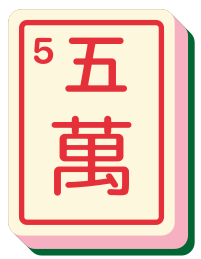
Dora are bonus tiles indicated by a tile flipped in the dead wall. Every dora in your hand adds han. Each kan flips another indicator, so the value of every hand at the table climbs as the game goes on. The app also ships red fives — aka dora — which are worth a han each and are visibly different tiles.
Furiten
The rule that punishes carelessness. If a tile that would complete your hand is sitting in your own discards, you cannot win on a discard at all. You are furiten, and you must self-draw. Temporary and riichi-locked variants of the same rule apply. Getting furiten wrong is how apps quietly ruin this game.
What the app enforces
- Full han and fu counting — the common yaku set, the yakuman set, pinfu at 20, seven pairs flat at 25, closed-triplet fu, rounding up to ten
- The one-yaku minimum, with dora correctly excluded from it
- The dead wall, the dora indicator, kan-dora on every kan, and ura-dora revealed only on a riichi win
- The riichi declaration: the thousand-point stick, the discard lock, ippatsu arming and breaking, double riichi
- Furiten — permanent, temporary and riichi — checked before any win is offered
- The exhaustive draw: the tenpai/noten exchange, and the dealer continuing only when tenpai
- Honba counters and the riichi stick pool, swept by the winner
Scores are in points, starting at 25,000, and they go negative — as they should.